

Skin pigmentation: why do pigment spots appear on the face
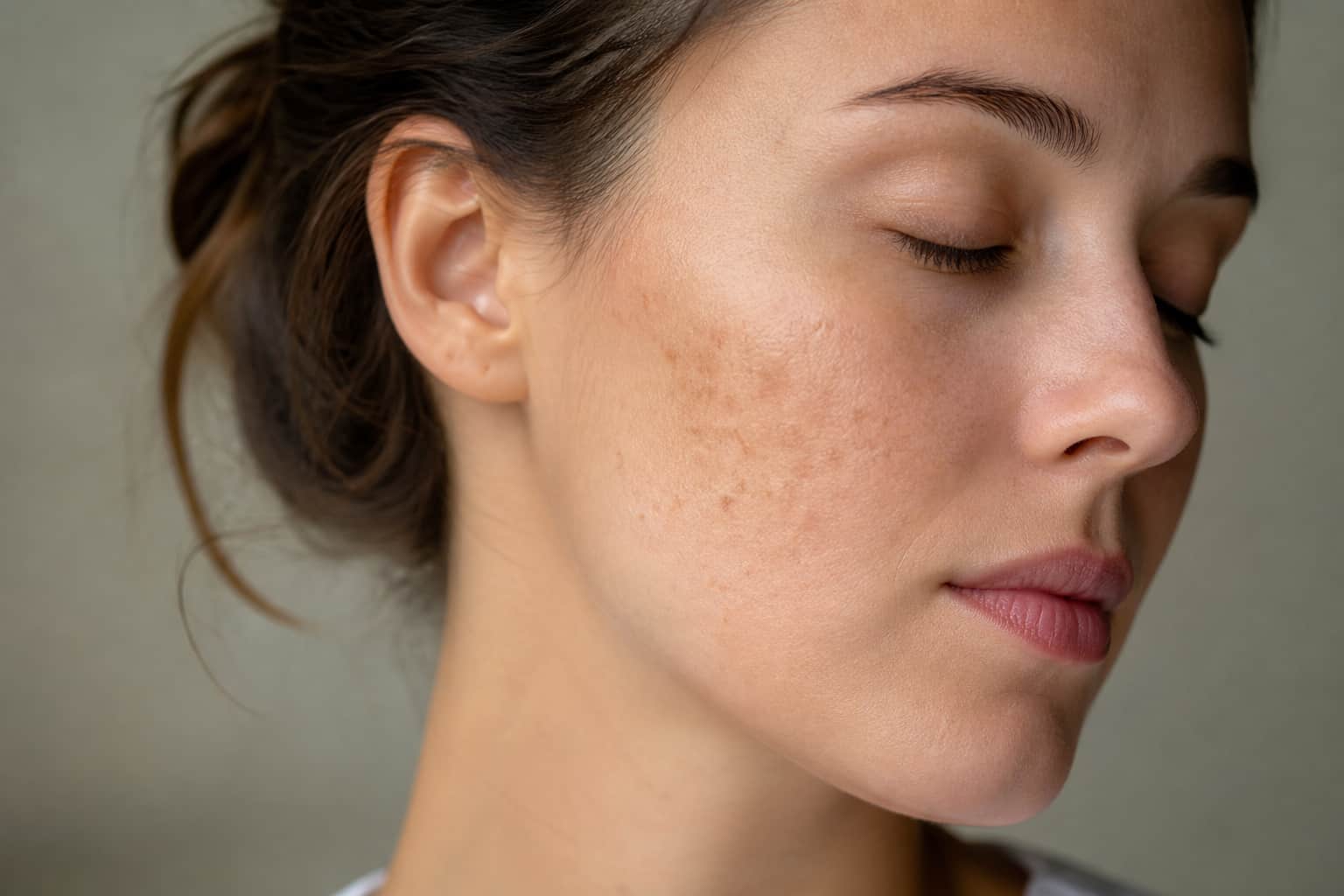
What are pigment spots, in simple terms
Pigment spots are areas of skin where more melanin (a natural pigment) accumulates than is needed. This results in an uneven complexion, with dark or yellowish patches that are particularly noticeable after the summer.
Main causes: sun exposure, post-acne, hormonal changes
Most often, sun-induced pigmentation is the main cause of changes in skin tone. Under the influence of solar radiation and UV rays, the body produces more melanin to protect itself. If you add post-acne, hormonal fluctuations or aggressive treatments to this, the risk of pigment spots increases.
Why pigmentation becomes more noticeable over time
Pigment has a cumulative effect. If you do not use SPF on your face regularly and neglect basic sun protection, even weak sunlight gradually makes the spots darker. This is precisely why it often feels as though pigmentation is ‘coming back’.
The impact of blue light and the urban environment
Blue light from screens and urban factors also affect the condition of the skin. They exacerbate photoageing, dull the complexion and trigger new pigmentation spots even without direct sunlight.
How SPF cream prevents facial pigmentation
What does SPF mean and what does it protect against
SPF is the level of protection against UVB rays, which cause sunburn and pigmentation. A high-quality facial sunscreen also helps reduce the impact of UVA rays, which are responsible for photoageing. This is why SPF and pigmentation are directly linked, and regular sun protection is the key to an even complexion.
How SPF reduces the sun’s impact on the skin
SPF acts as a filter: it reduces the amount of solar radiation that penetrates the skin. As a result, melanin production is reduced, and the skin tone appears more even, especially with daily exposure to external factors.
How SPF helps prevent new pigmentation spots
Does SPF help with pigmentation? Yes, but it’s important to understand: it doesn’t lighten existing spots. Its main function is to prevent new ones. That’s why an SPF cream for pigmentation is a basic skincare element that works for the long term and supports skin brightening in combination with other products.
When is SPF particularly important
SPF is always essential for pigmentation spots, but especially after peels, for post-acne, during hormonal changes, or if the skin already has an uneven tone. In these cases, sun protection must be as consistent as possible.
Why should SPF be used every day
How does SPF protect against pigmentation? Through regularity. Even on cloudy days or in the city, solar radiation continues to affect the skin. Daily sun protection is a habit that helps control the appearance of new spots.
How to choose a face sunscreen
The choice of SPF depends on your skin type, lifestyle and the level of sun exposure. SPF 30 or 50 — which is better? SPF 30 is suitable for city life, but if you are prone to pigmentation, SPF 50 is often the better choice. Texture is also important: light fluids or creams for daily use.
How to apply SPF correctly
Common mistakes when applying SPF
The effectiveness of SPF depends not only on the formula but also on how it is used. Using too little product is effectively the same as having no sun protection at all, whilst irregular application increases the risk of pigmentation. Even the best face sunscreen won’t work if you only use it occasionally.
Why SPF doesn’t protect against pigmentation: common mistakes in use
Using SPF only in summer
One of the most common mistakes. Sunlight affects the skin all year round, so SPF and pigmentation are linked even in winter.
Insufficient amount of product
A thin layer of cream does not provide the claimed level of protection. In this case, SPF simply does not fulfil its function for skin with pigmentation.
Failure to reapply SPF
The protective layer breaks down throughout the day. Without reapplication, sun protection weakens and the risk of pigmentation increases.
Relying solely on SPF without additional care
SPF is the foundation, but not the only tool. For best results, it should be combined with skin-brightening products, anti-ageing care and a comprehensive approach to facial skincare.
Conclusion: how SPF helps control the appearance of pigmentation
SPF and pigmentation are directly linked: without consistent sun protection, it is difficult to achieve an even skin tone. How can you protect your skin from pigmentation? Use SPF every day. How to choose? Focus on your skin type and the level of protection. Does SPF help? Yes, if it becomes a regular part of your skincare routine.
In your daily routine, it’s worth choosing products that combine skincare and protection. For example, Irene Bukur’s anti-pigmentation face cream with SPF 50 is a comfortable, non-comedogenic day cream with SPF that doesn’t leave a sticky feeling, provides reliable sun protection, works on skin tone and helps control the appearance of new pigmentation spots.
FAQ: frequently asked questions about SPF and skin pigmentation
Is SPF needed on cloudy days or in winter?
Yes. Solar radiation, particularly UVA rays, is present regardless of the season.
Does SPF help lighten pigmentation?
No, SPF does not directly lighten spots. However, it creates conditions in which skin lightening becomes possible and sustainable.
Can I use foundation with SPF?
You can, but it’s not enough. Foundation does not provide adequate sun protection, so you need a separate SPF cream for pigmentation.
Which SPF is best for pigmentation spots
We recommend SPF 50 with broad-spectrum protection, especially if you’re prone to uneven skin tone.
Related Articles

Related Products
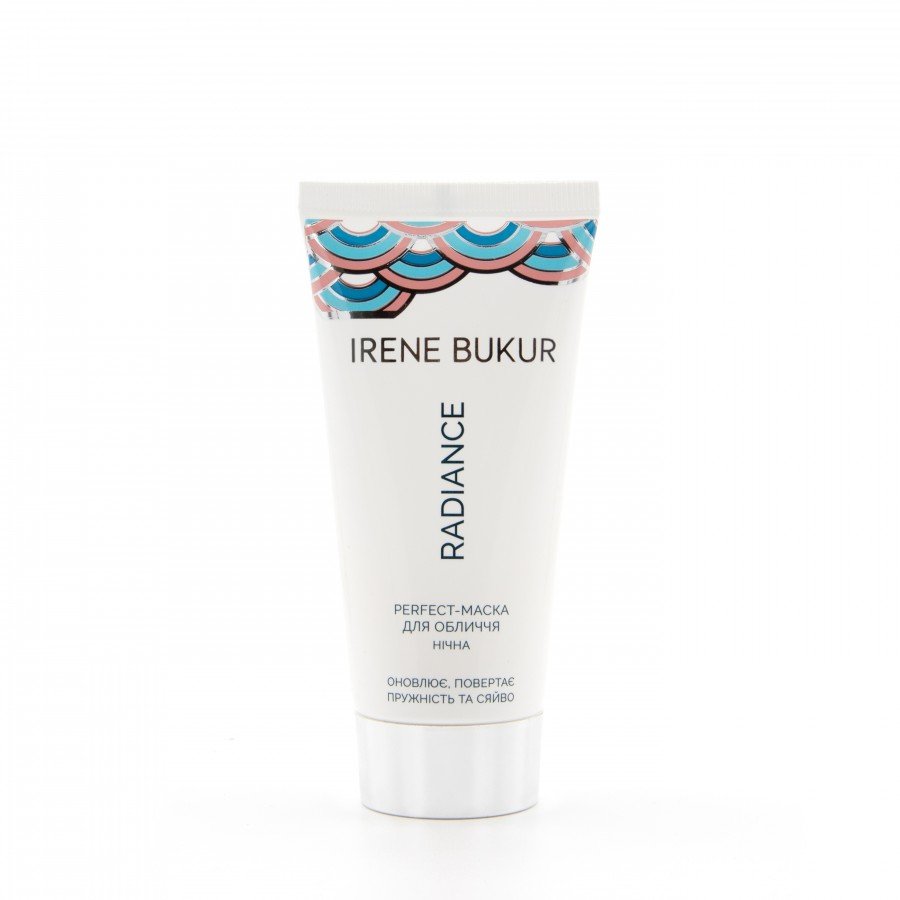
Night cream-mask for face Radiance with AHA-acid, 50 ml
Revolutionary formula with AHA-acid renews, tightens and restores skin radiance. The night mask &..
21.47£
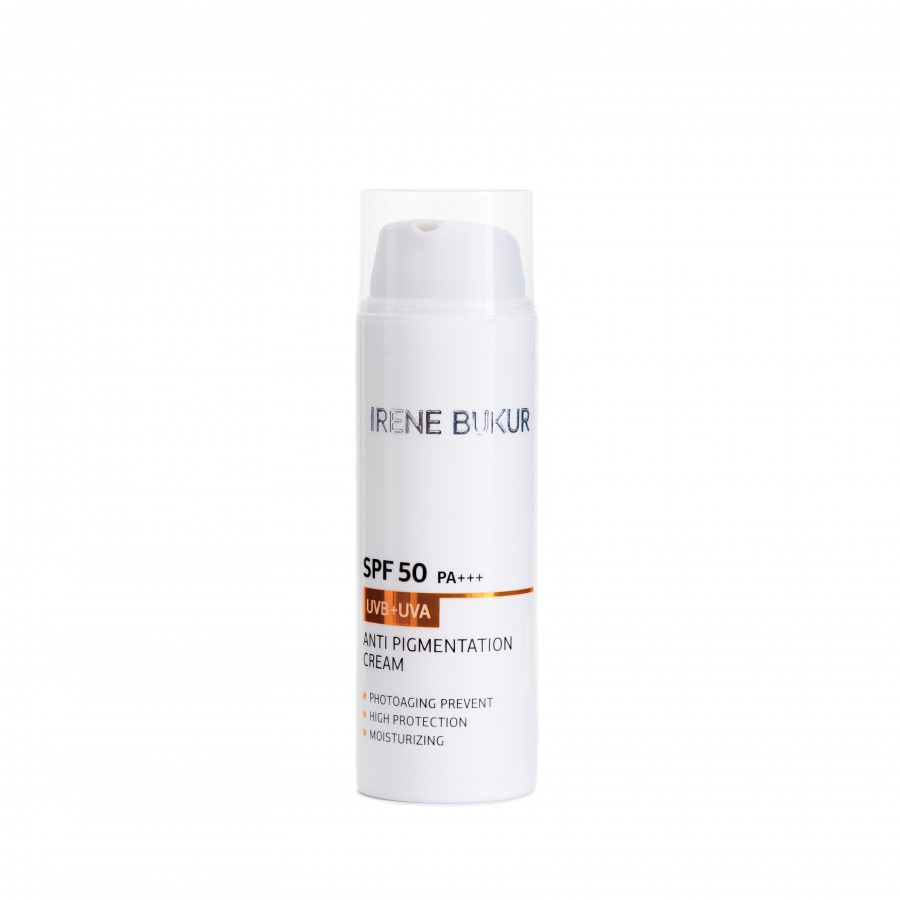
Anti-pigmentation face cream SPF 50, 50 ml
Innovative day cream created specifically for high-grade skin care, prone to pigmentation The sec..
40.09£
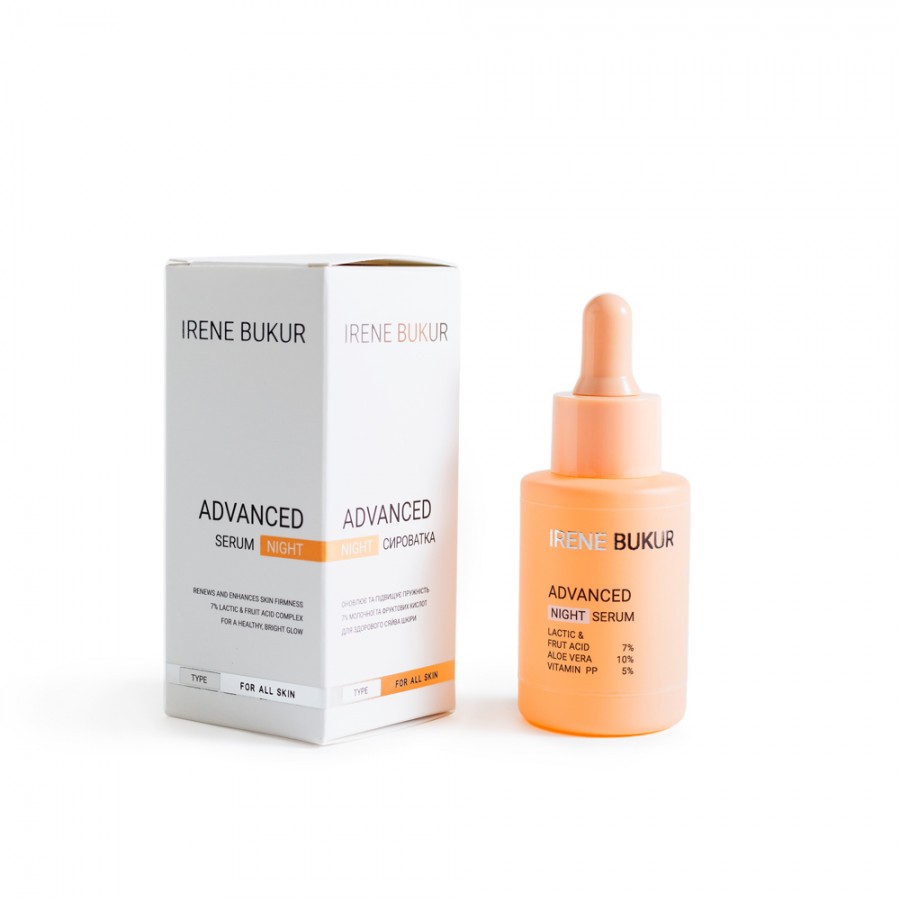
Advanced night serum, 30 ml
The new night serum is designed for intensive and deep skin renewal. Its formula, enriched with lact..
19.84£ 56.66£