

Hair Care: How to Understand Ingredients and Find What Actually Works
Walk into any cosmetics shop and you're immediately faced with dozens of shampoos, masks, serums and conditioners. Each one promises shine, volume, repair and healthy hair. The ingredient list on the back of the packaging takes up several lines of small print, and most of us simply ignore it — drawn instead to words like "nourishing", "strengthening" or "for colour-treated hair" on the front label.
But something has changed in recent years. Women are increasingly turning the bottle around. Looking for natural ingredients. Asking what SLS is and whether silicones are genuinely harmful. They want to understand what they're putting on their scalp and hair — not because it's fashionable, but because they've already discovered the hard way that an attractive label and real results don't always go hand in hand. And the issue isn't the quality of any particular brand — it's that the product simply isn't suited to your individual needs.
This guide will take you from a simple self-assessment to making informed choices. No complicated trichological jargon, no pressure to buy long lists of products. Just what you genuinely need to know to make your hair care routine finally work.
How to Understand What Your Hair Actually Needs — Without a Trichologist
Most women choose a shampoo based on what's written on the front: "for dry hair", "for oily hair", "for colour-treated hair". But this is a superficial approach that often leads to the wrong choice — primarily because hair type and scalp type are two entirely different things that can be completely at odds with one another.
Shampoo cleanses the scalp and roots, so it should be chosen according to your scalp type. Masks, conditioners and leave-in serums are for the lengths and ends, and here the condition of the hair along its length is what matters.
You can carry out a basic self-assessment at home in just a few minutes, with no specialist equipment whatsoever.
The scalp type test
Wash your hair with your usual shampoo, dry it without heat tools or additional products, and leave it for 24 hours. The following day, press a sheet of kitchen paper against your scalp at the crown and behind your ears.
If the paper stays clean — your scalp is dry. Your hair likely looks dull, becomes static easily, and the ends split even without colouring. You may also notice a feeling of tightness or fine flaking.
If there are visible oily patches on the paper — your scalp is oily. Hair becomes dirty quickly, looking heavy and lank at the roots by the second day after washing, while the lengths may be perfectly normal or even dry.
If the patches are barely visible — your scalp is normal or combination. The most common scenario: an oily scalp with dry, porous lengths at the same time. This is precisely why your shampoo and mask need to do different jobs.
The condition of the lengths
Assess your hair by touch and appearance. Hair that is springy, elastic and has a natural shine is in good condition. If hair breaks when brushed, looks dull even after washing, tangles easily or feels rough to the touch — these are signs of a damaged cuticle that needs repair.
Pay particular attention to the ends. Split ends are the first sign that the hair shaft is losing moisture along its entire length and the protective cuticle layer has weakened.
Identify your main concern
Once you understand your scalp type and the condition of your lengths, settle on one main concern. This determines which product is essential for you and which is supplementary.
The first step for any scalp type is proper cleansing. If your scalp is prone to oiliness or you're experiencing dandruff, look into a scalp exfoliant — it removes the build-up of sebum and dead skin cells that a regular shampoo can't fully clear.
Hair Loss and Slow Growth: What's Behind the Problem
Hair loss is one of the most common concerns in hair care — and one of the most ambiguous, because a single symptom can have a whole range of different causes. Working out what's actually happening in your case is the first step towards the right solution.
Oily scalp and clogged follicles
When the scalp produces an excess of sebum, it accumulates around the hair follicles and gradually impairs their function. Blocked pores are not merely an aesthetic problem: a follicle that cannot breathe produces weak, fine hair that sheds before it has a chance to grow properly.
Women often don't connect oiliness at the roots with increasing hair loss, especially when the lengths look fine — but the link is direct. Regular scalp detoxing — removing excess sebum and impurities without stripping the skin — is a key part of caring for this scalp type. For a detailed guide on how to cleanse and detox the scalp properly, see our dedicated article.
Dry scalp, dandruff and an imbalanced barrier
A dry scalp is the other extreme, and it too has a negative impact on hair growth. When the skin's moisture-lipid balance is disrupted, it begins to flake, itching appears, and follicles receive less nourishment. In this case, dandruff is not fungal in origin — it stems from dehydration and a compromised skin barrier.
A common mistake: treating a dry scalp with aggressive "medicated" anti-dandruff shampoos, which only intensify the dryness and perpetuate the cycle.
Stress, hormones and internal causes
Hair responds to everything that happens inside the body. Prolonged stress raises cortisol levels, which directly affects the hair growth cycle and can push follicles into a resting phase prematurely. Hormonal changes — pregnancy, the menopause, changing contraception — frequently trigger seasonal or long-term shedding. Deficiencies in iron, zinc, B vitamins and vitamin D are a widespread cause that a simple blood test can identify.
If shedding is heavy and has been going on for more than three months, it's worth consulting a trichologist. But a good home care routine remains an important form of support: it doesn't replace treatment, but it creates the right conditions for a healthy scalp and follicles.
For more on the causes and approaches to external care, see our article on preventing hair loss.
Hair Repair: Colouring, Heat Damage and Stress
Damaged hair is hair with a compromised cuticle structure. The cuticle is the outer protective layer of the hair shaft, made up of microscopic overlapping scales. When they lie flat against one another, hair looks smooth and shiny and retains moisture well. When those scales are raised or broken, the shaft becomes porous: it loses moisture rapidly, reflects light poorly, breaks and tangles.
Damage accumulates gradually — and is usually the result of several factors at once.
Colouring and bleaching
Any chemical colouring opens the cuticle and partially breaks the disulphide bonds within the hair shaft — the very bonds responsible for strength and shape. The more aggressive the dye, the higher the developer percentage and the more frequent the process, the deeper the damage. Bleaching is the most destructive procedure of all for hair structure, as it dissolves melanin and opens the cuticle significantly.
Heat styling
Hair dryers and styling tools gradually break down the structure of the hair shaft with regular use. Temperatures above 180°C alter the protein composition of the hair: keratin denatures, leaving the shaft brittle and stripped of its natural elasticity.
Stress and internal changes
Stress and hormonal shifts affect not only hair loss but also the quality of new hair as it grows. During prolonged periods of stress, new growth can be finer, drier and more prone to breakage — even if you never colour your hair or use heat tools.
Repair is a process, not a single treatment
The most common mistake with damaged hair is expecting visible results from one session. Repairing the hair shaft takes time and a consistent approach: gentle cleansing that doesn't open the cuticle further, regular nourishment along the length with plant-based proteins and natural oils, and protection against further damage.
It's equally important not to neglect the scalp when the primary goal is repairing the lengths. A healthy scalp produces healthy new growth — hair that emerges with a normal structure from the outset.
Natural Ingredients: What to Look For and Why It Matters
When women begin reading cosmetic ingredient lists, the first thing that stops them is a column of Latin names that seem impossible to navigate. In reality, knowing just a few key markers is enough to quickly understand what you're looking at.
What to look for
Plant extracts and natural oils in the first half of the ingredient list are a good sign. Under INCI rules, ingredients are listed in descending order of concentration. If you see plant extracts, natural oils or plant-based proteins near the top, they form the foundation of the product — rather than being a cosmetic addition near the end of the list.
Herbal extracts — nettle, chamomile, oak bark, green tea, hops — have sebum-regulating, anti-inflammatory and strengthening properties on the scalp. Natural oils — argan, coconut, jojoba, shea, macadamia — nourish the cuticle and restore natural shine without the heavy, weighed-down feeling associated with silicones.
Provitamin B5, or panthenol, is one of the most effective moisturising ingredients for hair. It penetrates the shaft, retains moisture from within and improves elasticity. Plant-based amino acids and proteins — wheat or rice protein, plant-derived keratin — rebuild disulphide bonds and strengthen the hair's structure.
What to avoid
SLS and SLES — sodium lauryl sulphate and sodium laureth sulphate — are aggressive surfactants that lather well and degrease effectively. But in doing so, they strip away the scalp's natural lipid layer, break down its protective barrier and open the cuticle. The skin responds by producing even more sebum — and the cycle continues. For dry and sensitive scalps, sulphates further aggravate irritation and flaking.
A gentle, safe alternative is cocamidopropyl betaine and other plant-derived betaines, which cleanse just as effectively but far more kindly.
Parabens — methylparaben, ethylparaben, propylparaben, butylparaben — are preservatives that a growing number of manufacturers are moving away from due to concerns about long-term use. Silicones — dimethicone and derivatives ending in -cone or -xane — don't directly damage hair, but with regular use they build up on the cuticle, weigh hair down and gradually prevent nourishing ingredients from penetrating. Mineral oils — mineral oil, paraffinum liquidum — coat the hair shaft with a film that creates smoothness but provides no structural nourishment.
Natural ingredients and the scalp as a living ecosystem
The scalp is not simply a surface from which hair grows. It is a living ecosystem with its own microbiome, moisture-lipid balance and protective barrier. Aggressive synthetic ingredients disrupt that balance. Plant extracts and natural oils, by contrast, support it and interact with the skin without adverse effects.
Natural hair care products don't deliver the instant smoothness and shine of silicone-based formulas. But used consistently, they gradually normalise scalp function, strengthen follicles and improve the quality of new growth. It's not a quick result — but it is a lasting one.
Switching to natural hair care is often accompanied by a transition period of two to four weeks, during which hair may feel heavier or oilier as the scalp adjusts. This is normal — and worth seeing through.
How Many Products Do You Actually Need?
The beauty industry is built on the idea that more products equal better results. Experience shows the opposite: when you replace a shelf of ten products with two to four chosen for your specific needs, hair responds better.
The reason is straightforward: every unnecessary product adds extra load to the scalp and hair shaft. A mask that doesn't suit your scalp type can increase oiliness or make hair feel heavy. A leave-in spray with silicones applied over a nourishing serum blocks its action. More does not mean better.
A basic routine for most hair types
A shampoo chosen for your scalp type, with one job: to cleanse the scalp and roots effectively without disrupting their natural balance. A mask or nourishing conditioner applied only to the lengths and ends, never the scalp. Its purpose is to close the cuticle scales, nourish and moisturise the hair shaft. Using it once or twice a week is sufficient.
These two products are enough if your scalp is in good condition and the lengths have no significant damage.
When a third product is needed
If there is a specific scalp concern — hair loss, slow growth, excessive oiliness or a dry, flaking scalp — a scalp mask-exfoliant can be added to the basic routine. It is applied directly to the scalp before washing. For stimulating hair growth, there are also effective serums and treatments based on natural ingredients that safely encourage new growth and combine well with other products. For repair and nourishment, a leave-in serum with natural oils works well on the lengths.
On the minimalist approach
Two to four products chosen precisely for your needs is not a compromise or a cost-cutting measure. It is an effective strategy. Each product performs a specific function without overlapping with another. Results from this approach become visible within a few weeks of consistent use — and they build over time rather than disappearing the moment you stop.
Conclusion
Good hair care doesn't begin with choosing a product — it begins with understanding your scalp and the condition of your hair. Identify your type, define your main concern, learn to read an ingredient list — and every purchase becomes a considered decision rather than another experiment.
At Irene Bukur, we believe that natural plant-based ingredients, a clean formula free from aggressive synthetics and a consistent minimalist approach are not the preserve of expensive salons. They are available in everyday home care. If you're ready to find your routine, the Irene Bukur team will be happy to help.
Related Articles
Related Products
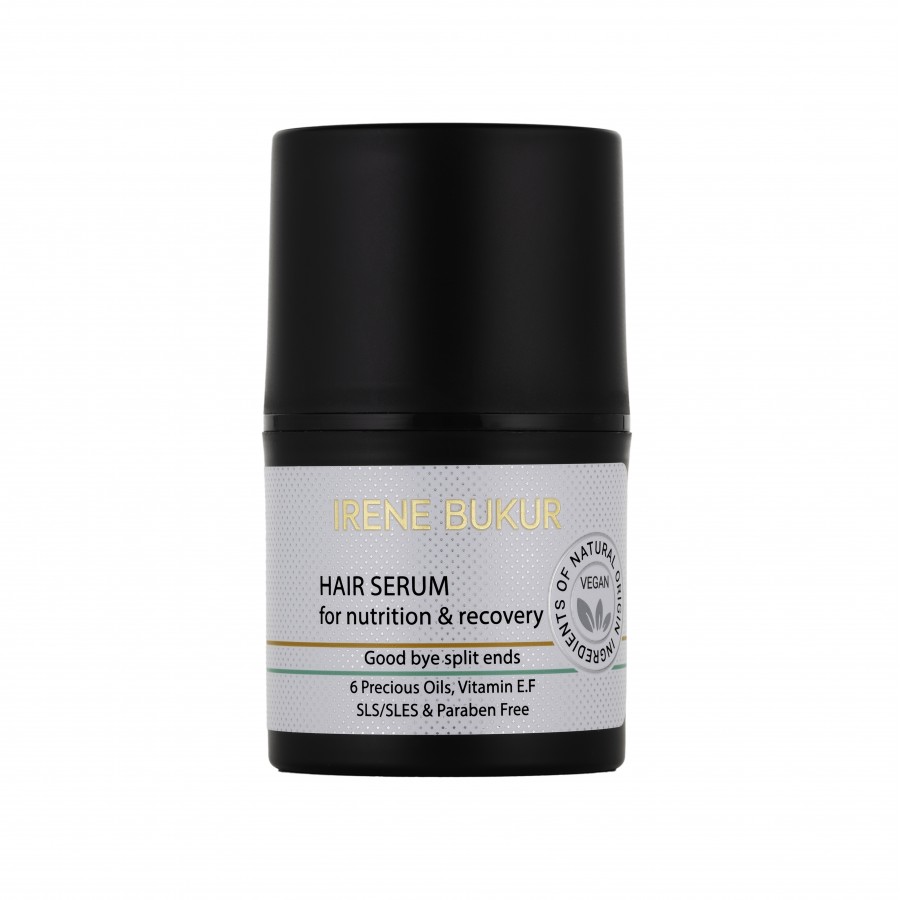
Hair serum with precious oils, 30 ml
This leave-in hair serum, containing a complex of precious oils combined with vitamins E and F, prom..
19.16£
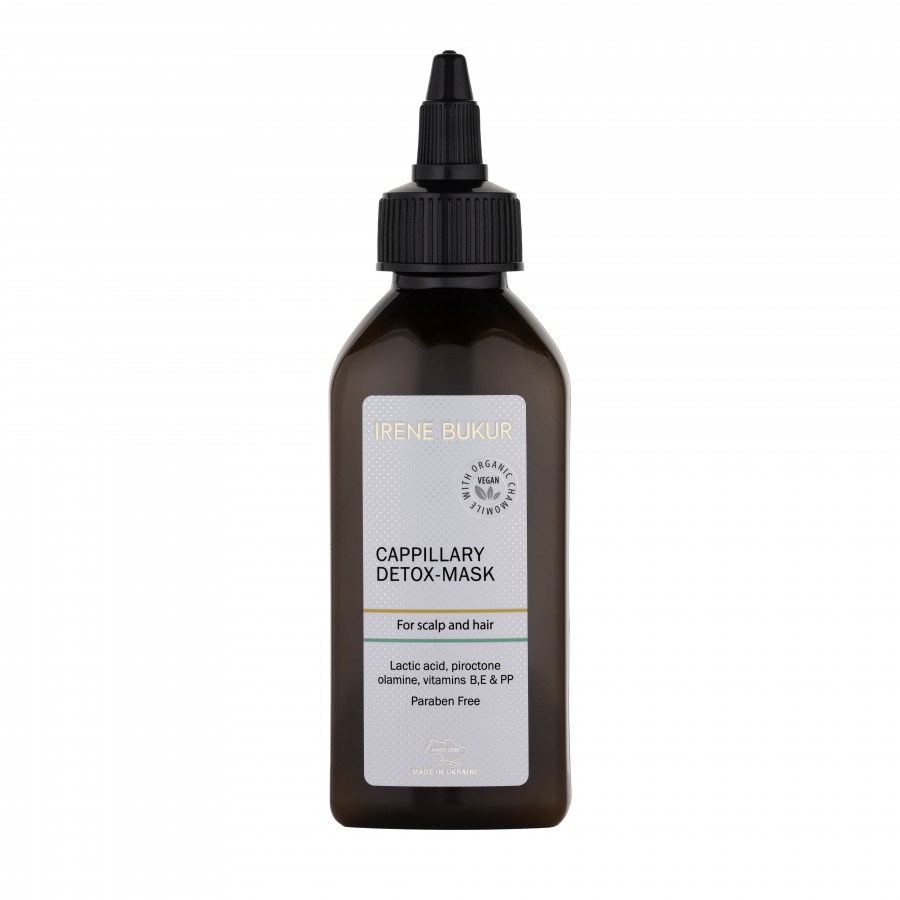
Mask "Capillary" for scalp and hair, 100 ml
The vegan detox formula with organic chamomile extract deeply cleanses and revitalises the scalp, st..
15.02£
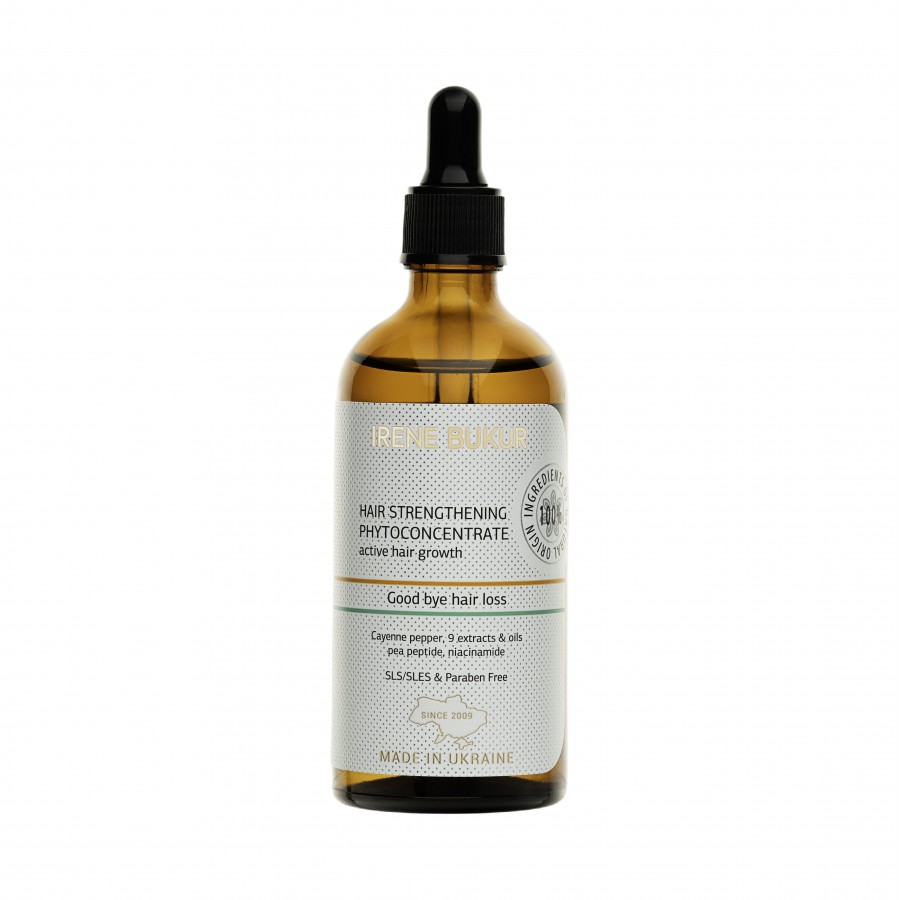
Hair Strengthening Phytoconcentrate, 100 ml
An intensive phytoformula based on 90% natural plant ingredients, stops and prevents hair loss and s..
28.32£
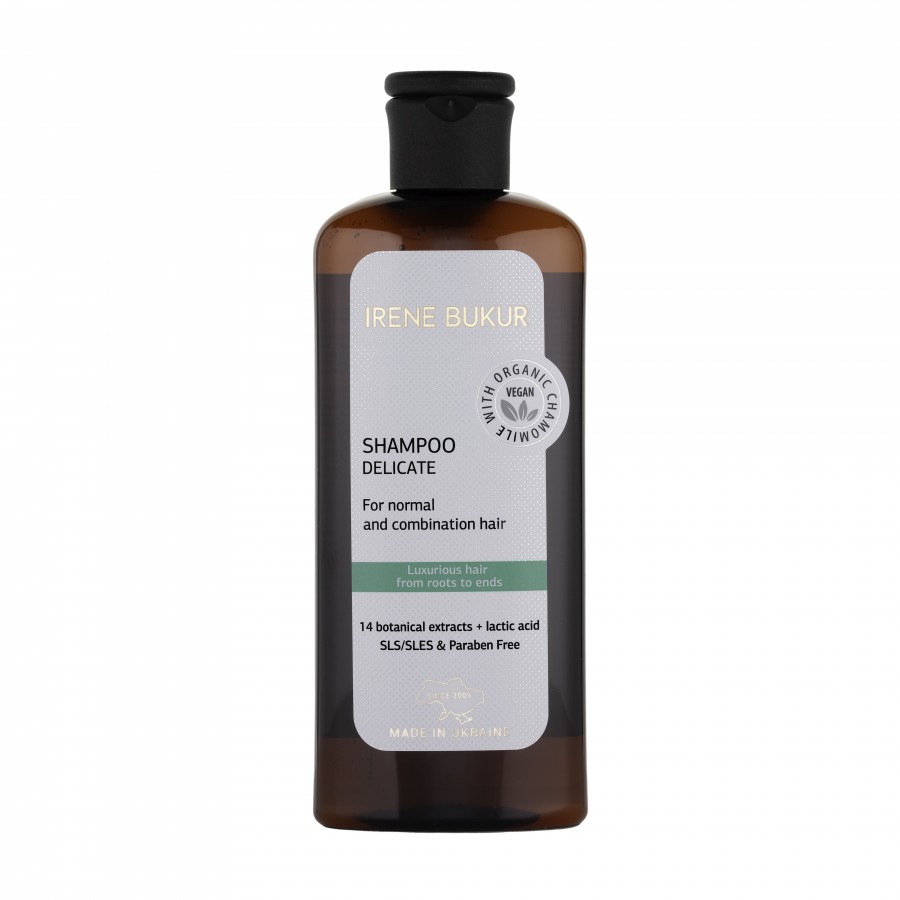
Shampoo "Delicate" with 14 herbs, 250 ml
The improved vegan formula with organic chamomile extract gently cleanses, revitalizes, and restores..
17.42£